
Dracorex
Dracorex hogwartsia
"Dragon king of Hogwarts"
Sobre esta espécie
Dracorex hogwartsia is one of the dinosaurs with the most peculiar story in paleontology: it was named by children, in honor of a fictional school of witchcraft, and its status as a valid species is one of the most contentious taxonomic debates of the Late Cretaceous. Described in 2006 by Robert Bakker and collaborators based on a nearly complete skull discovered in the Hell Creek of South Dakota by a group of amateur fossil hunters, the animal presented a cranial morphology radically different from other known pachycephalosaurids: the skull was long, low, and flat, without any trace of a bony dome, but decorated with an impressive series of horns and nodules along the frontoparietal and temporal region. The visual result is, in fact, remarkably similar to medieval descriptions of dragons, which inspired the specimen's donors, children from the Children's Museum of Indianapolis, to propose the name to the paleontologist. The main scientific controversy surrounding Dracorex was raised in 2009, when Jack Horner and Mark Goodwin published a detailed histological analysis of the skull. Upon examining the microstructure of the frontoparietal bone, they found immature bone tissue (fibrolamellar, with abundant vasculature and without complete remodeling) characteristic of young individuals, not adults with completed bone growth. Horner and Goodwin's hypothesis is that Dracorex hogwartsia is not a distinct species, but rather a juvenile of Pachycephalosaurus wyomingensis: the flat skull with horns would be the initial state, and the dome would form progressively during growth, similar to the development of horns in sheep. This interpretation would also unify Stygimoloch spinifer as a teenager of Pachycephalosaurus, consolidating three names into a single taxon. The synonymy proposal, while widely accepted by many specialists, remains formally controversial. Other researchers, such as Robert Sullivan (2006) and David Evans and collaborators (2013), argue that the morphological differences between the skulls are too pronounced to be explained by ontogeny alone, and that Dracorex may represent a distinct lineage of flat-skulled pachycephalosaurids that lived in sympatry with Pachycephalosaurus. The question is complicated by the rarity of specimens: only one Dracorex skull is known with certainty, making it impossible to establish complete ontogenetic series. Regardless of taxonomic resolution, the Dracorex skull is one of the most extraordinary known among ornithischian dinosaurs. The tubercles, spines, and nodules covering the cranial surface have no parallel in any other pachycephalosaurid, and their function continues to be debated: they may have served for intraspecific recognition, surface thermoregulation, sexual display, or passive defense. The preservation of the specimen, with unusually well-conserved cranial surface details, has made Dracorex one of the most studied and artistically represented dinosaurs of the last twenty years.
Geological formation & environment
The Hell Creek Formation is one of the most famous and studied sedimentary units in the world, deposited during the terminal Maastrichtian (approximately 68 to 66 Ma) in the northern Great Plains of the United States, spanning the current states of Montana, Wyoming, North Dakota, and South Dakota. The formation is composed of sandstones, siltstones, and shales of fluvial and deltaic origin, with a total thickness of up to 100 meters, deposited in a meandering river and floodplain system in a warm, seasonally humid subtropical climate. Vegetation preserved as coal and pollen indicates open angiosperm forests with palms, conifers, and ferns. The Hell Creek Formation records the latest Cretaceous fauna immediately before the Chicxulub asteroid impact (66 Ma) that caused the mass extinction at the end of the Mesozoic. The vertebrate fauna is extraordinarily diverse and includes Tyrannosaurus rex, Triceratops horridus, Ankylosaurus magniventris, Edmontosaurus annectens, Pachycephalosaurus wyomingensis (and the controversial Dracorex), multiple dromaeosaurids, ornithomimosaurids, and other taxa. The top of the formation is marked by the KPg iridium layer (Cretaceous-Paleogene boundary), representing the mass extinction event. The stratigraphic context of Dracorex, from the top of the Hell Creek, positions the animal as one of the last non-avian dinosaurs to live before the great extinction.
Image gallery


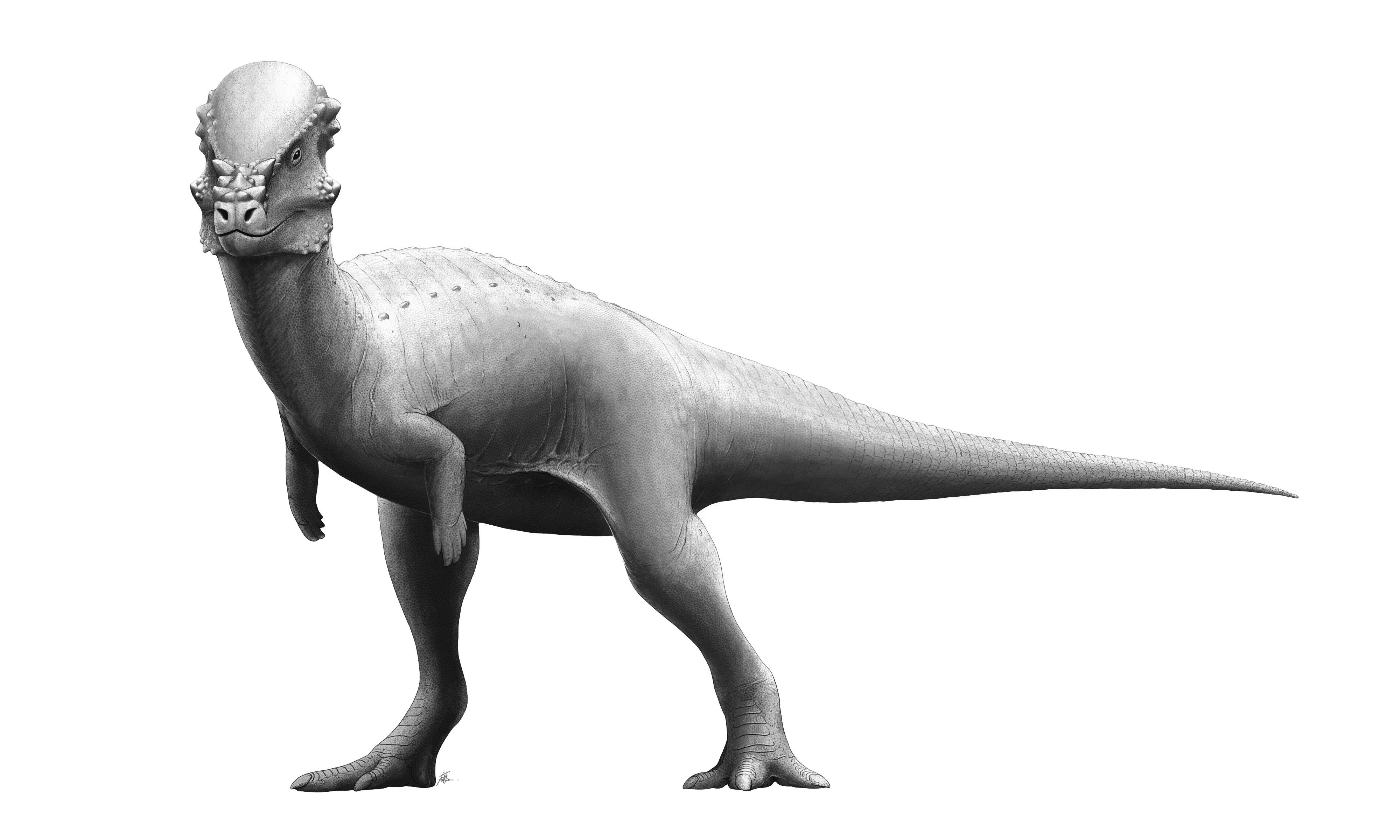

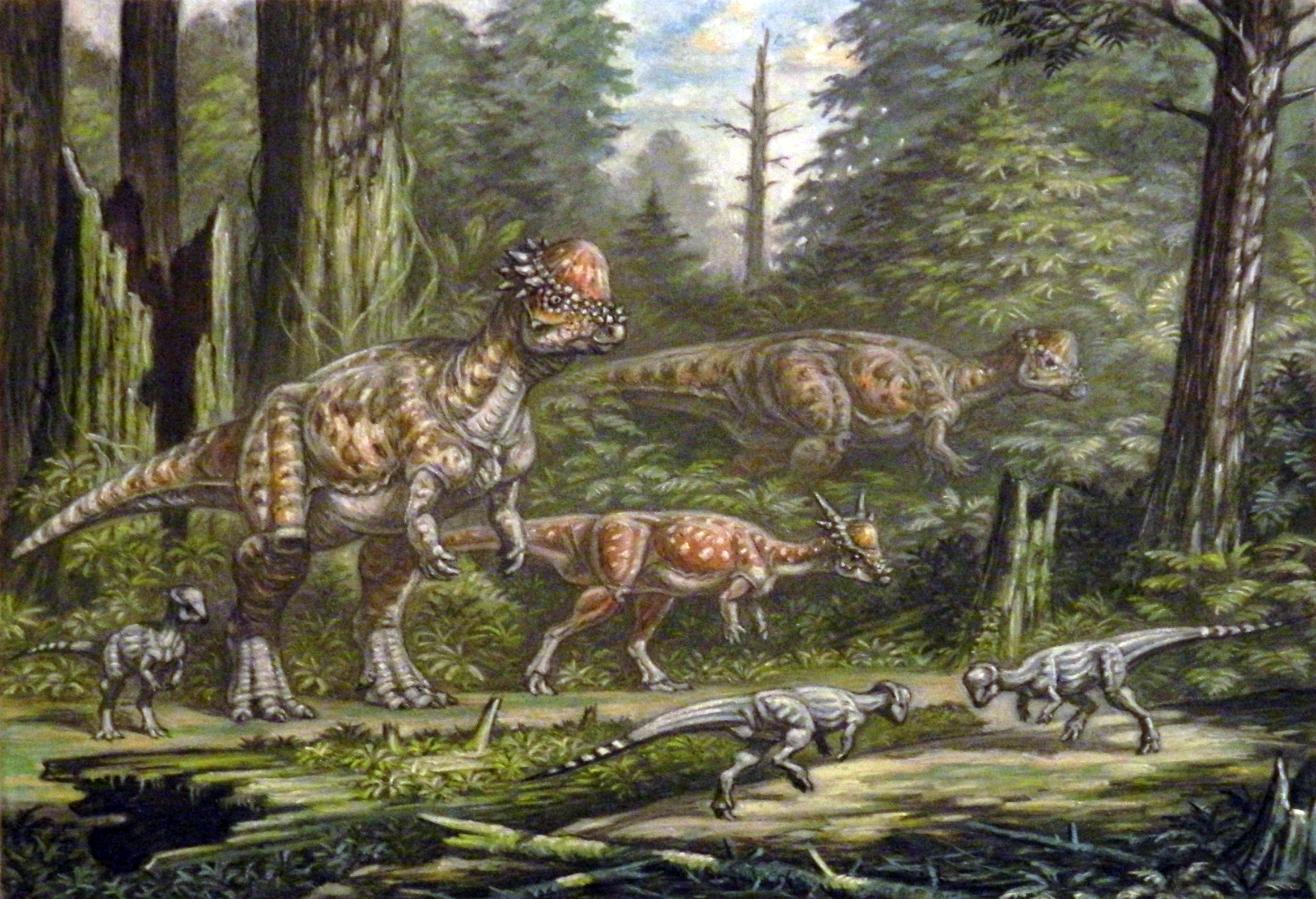
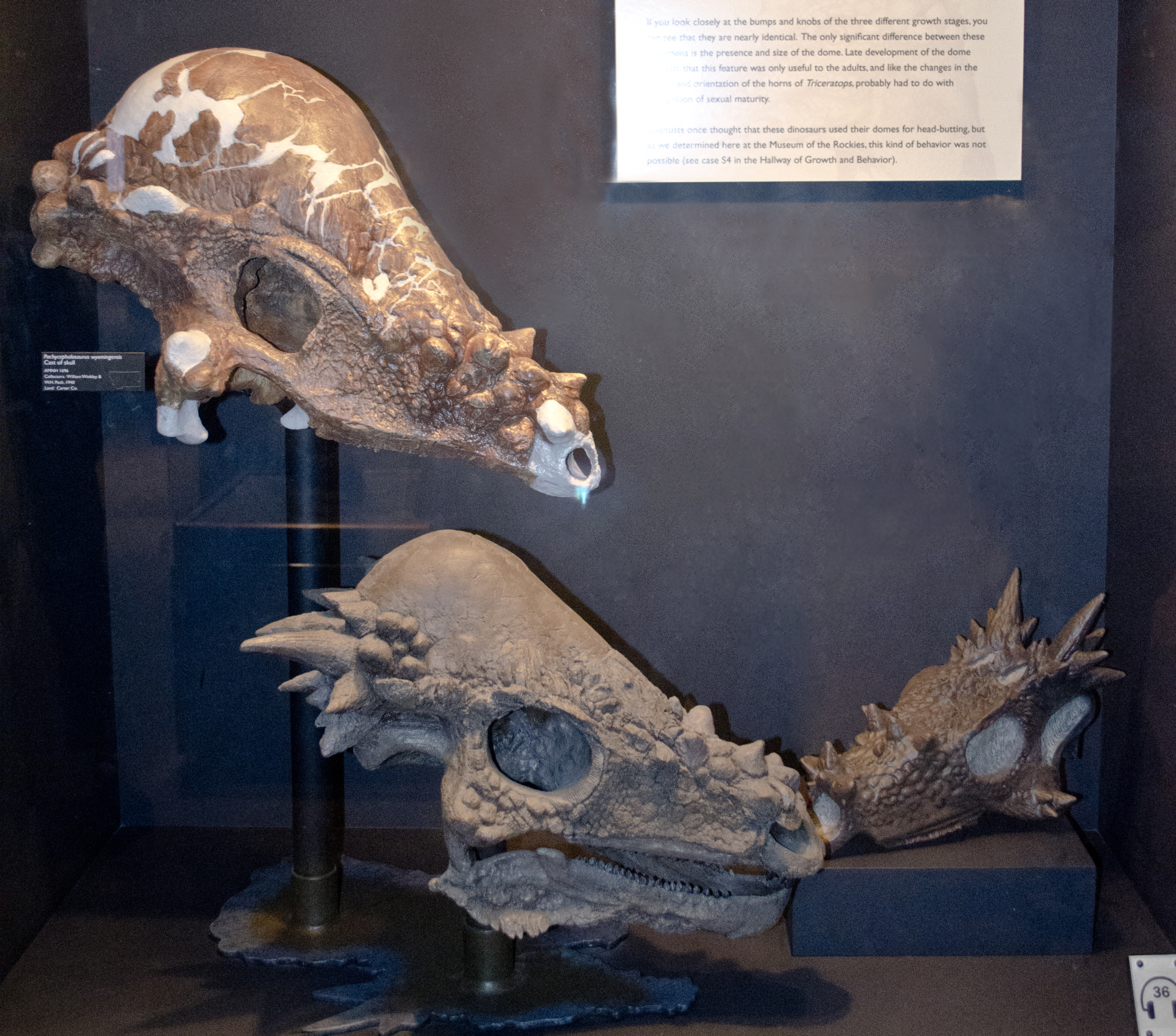


Black-and-white scientific reconstruction of Dracorex hogwartsia by Nobu Tamura, white background. Current consensus considers Dracorex a juvenile ontomorph of Pachycephalosaurus wyomingensis.
CC BY-SA 3.0
Ecology and behavior
Habitat
Dracorex hogwartsia inhabited the coastal plains, river margins, and angiosperm forests of the Hell Creek Formation, in the terminal Maastrichtian (approximately 66 Ma), in what are now the Dakotas and adjacent states of the United States. The environment was warm and seasonally humid, with rich vegetation of palms, magnolias, sycamores, and conifers. The fauna was exceptionally diverse: Tyrannosaurus rex, Triceratops horridus, Edmontosaurus annectens, Ankylosaurus magniventris, and several species of smaller theropods coexisted in the same ecosystem. The Laramidian basin, separated from eastern North America by the Cretaceous Interior Seaway, created conditions of relative isolation that favored vertebrate diversification.
Feeding
Herbivorous, like all pachycephalosaurids. With simple small teeth adapted for cutting and grinding vegetation, Dracorex likely consumed low-growing foliage, fruits, seeds, and shoots of angiosperms and ferns. Its small size (2.4 meters, ~40 kg) and agile bipedal posture suggest an active forager that exploited multiple microhabitats, including dense understory vegetation where larger predators such as Tyrannosaurus would have difficulty maneuvering. The diet based on low-growing vegetation would be complemented by energy-rich fruits and seeds when available.
Behavior and senses
If interpreted as a juvenile Pachycephalosaurus (Horner and Goodwin's hypothesis), Dracorex represents a life stage without the adult head-butting dome, which would not yet use the skull for direct impact combat. If it is a valid species, the spiny cranial ornamentation likely served for intraspecific recognition, sexual display, or passive defense against predators. In either case, agile bipedal locomotion would be essential both for escaping predators and for competing for resources. The terminal Maastrichtian ecological context, with multiple large predators, created strong selective pressure for efficient antipredatory behaviors in small animals.
Physiology and growth
As a pachycephalosaurid, Dracorex was likely endothermic (warm-blooded), with elevated metabolism consistent with that of other derived Cretaceous ornithischians. Histological analysis of the skull by Horner and Goodwin (2009) revealed immature fibrolamellar bone with abundant vasculature, indicative of rapid, active growth, similar to that observed in young birds and mammals. If it is a juvenile Pachycephalosaurus, this bone pattern is exactly what is expected for an animal in a phase of pre-adult accelerated growth. The absence of a dense bony dome means Dracorex would not have had the capacity to absorb high-velocity cranial impacts like adults, reinforcing the idea that direct impact behaviors were restricted to mature individuals.
Paleogeography
Continental configuration

Ron Blakey · CC BY 3.0 · Cretáceous, ~90 Ma
During the Maastrichtiano (~66–66 Ma), Dracorex hogwartsia inhabited Laramidia, the western half of present-day North America, separated from the east by the Western Interior Seaway, a shallow sea dividing the continent. The continents were in very different positions: India was drifting toward Asia, Antarctica was still connected to Australia, and South America was an isolated island.
Inventário de Ossos
Dracorex hogwartsia is known essentially from a single specimen, TCMI 2004.17.1, deposited at the Children's Museum of Indianapolis. The specimen consists of a nearly complete skull with partial mandible and some associated cervical vertebrae. The postcranium is entirely unknown for the nominant taxon. The scarcity of material is one reason the taxonomic debate with Pachycephalosaurus wyomingensis remains unresolved: there is insufficient ontogenetic series for adequate comparison.

Found elements
Inferred elements
Scientific Literature
4 papers in chronological order — from the original description to recent research.
Dracorex hogwartsia, n. gen., n. sp., a spiked, flat-headed pachycephalosaurid dinosaur from the Upper Cretaceous Hell Creek Formation of South Dakota
Bakker, R.T.; Sullivan, R.M.; Porter, V.; Krisko, P.; Saulsbury, J. · New Mexico Museum of Natural History and Science Bulletin
Founding paper describing Dracorex hogwartsia based on specimen TCMI 2004.17.1, a nearly complete skull from the Hell Creek Formation of South Dakota. Bakker and collaborators characterize the new taxon by the long, low, flat skull with multiple spines and nodules on the frontoparietal surface, in absolute contrast to the dense dome of Pachycephalosaurus wyomingensis. The generic name Dracorex ('dragon king') was proposed by the children who donated the specimen to the Children's Museum of Indianapolis, and the specific epithet hogwartsia honors Hogwarts school from J.K. Rowling's Harry Potter series. Bakker acknowledges in the text that the taxonomic position of the genus is uncertain and it may represent a juvenile Pachycephalosaurus, but opts to formally describe the taxon given the distinct morphological suite. This paper inaugurates a debate about pachycephalosaurid ontogeny that persists to this day.

Extreme cranial ontogeny in the Upper Cretaceous dinosaur Pachycephalosaurus
Horner, J.R.; Goodwin, M.B. · PLOS ONE
Central work in the Dracorex taxonomic debate, proposing that the animal is actually a juvenile of Pachycephalosaurus wyomingensis. Horner and Goodwin perform detailed histological analysis of cranial elements of Hell Creek Formation pachycephalosaurids at multiple growth stages. In the Dracorex skull, they find fibrolamellar bone with abundant vasculature and absence of remodeled bone tissue, characteristics of young animals with active bone growth. In contrast, the adult Pachycephalosaurus skull shows dense, remodeled bone with organized lamellae, typical of completed growth. The authors propose that the flat spike-bearing skull is the juvenile state, Stygimoloch's partial dome is the adolescent state, and Pachycephalosaurus's full, massive dome is the adult state: three 'species' would be a single taxon at three life stages.
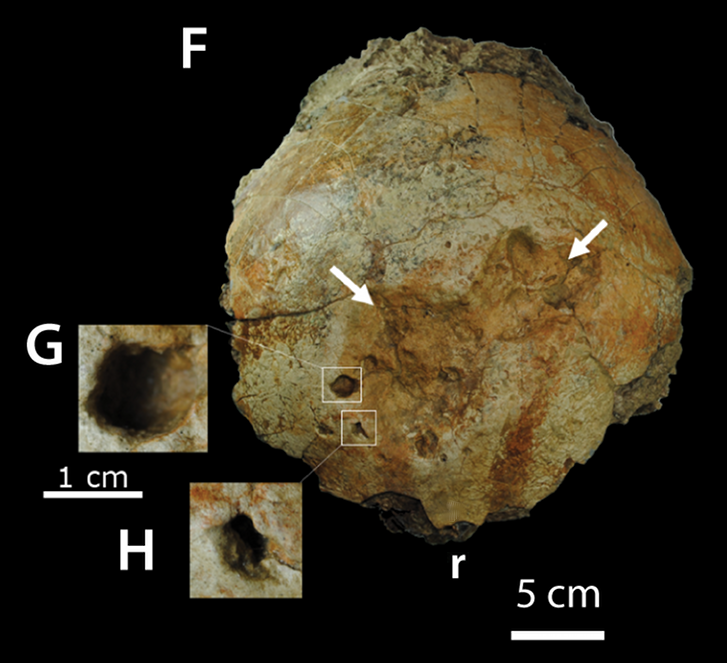
A taxonomic review of the Pachycephalosauridae (Dinosauria: Ornithischia)
Sullivan, R.M. · New Mexico Museum of Natural History and Science Bulletin
Comprehensive taxonomic review of Pachycephalosauridae evaluating the validity of all named genera and species, concluding that Dracorex hogwartsia and Stygimoloch spinifer are valid and distinct taxa. Sullivan analyzes the morphological differences between the skulls of Dracorex, Stygimoloch, and Pachycephalosaurus and argues that the variations exceed what is expected for intraspecific ontogenetic variation. Among the diagnostic characters of Dracorex, Sullivan highlights the specific configuration of the squamosal tubercles, the angle of the postorbital process, and the morphology of the jugal region, which differ from Pachycephalosaurus beyond what growth could explain. The author also discusses pachycephalosaurid diversity in the Late Cretaceous of North America, arguing that the Hell Creek fossil record documents a more diverse fauna than previously recognized.

The oldest North American pachycephalosaurid and the hidden diversity of small-bodied ornithischian dinosaurs
Evans, D.C.; Schott, R.K.; Larson, D.W.; Brown, C.M.; Ryan, M.J. · Nature Communications
Description of the oldest North American pachycephalosaurid provides new context for evaluating the ontogenetic synonymy hypothesis for Dracorex hogwartsia and Stygimoloch spinifer. Evans and collaborators reveal unexpected diversity in small-bodied ornithischian dinosaurs and argue that the morphological variation between flat and domed skulls may reflect, at least in part, real taxonomic diversity rather than merely ontogeny. The work demonstrates that flat or low-skulled pachycephalosaurid lineages existed throughout the evolutionary history of the group, not only as juvenile stages of domed forms. This weakens the argument that all flat skulls are necessarily juveniles, and strengthens the possibility that Dracorex is a distinct species. The study also illuminates the biogeography of North American pachycephalosaurids and Late Cretaceous extinctions.
Espécimes famosos em museus

TCMI 2004.17.1
Children's Museum of Indianapolis, Indianapolis, EUA
Holotype and only known specimen of Dracorex hogwartsia, donated to the museum by the fossil hunters who found it in South Dakota in 2003. Consists of a nearly complete skull with partial mandible and associated cervical vertebrae. The specimen is permanently displayed at the museum and is one of the most photographed objects in the collection, partly because of the story of its name.
BHI cast of TCMI 2004.17.1
Black Hills Institute of Geological Research, Hill City, EUA
High-quality cast of the Dracorex hogwartsia holotype skull, used in traveling exhibitions and provided to partner museums for scientific study and display. The institute participated in the preparation and documentation of the original specimen.
USNM cast exhibit
Smithsonian National Museum of Natural History, Washington D.C., EUA
Display cast of the Dracorex hogwartsia skull at the Smithsonian National Museum of Natural History, often exhibited alongside Pachycephalosaurus specimens to contextualize the taxonomic debate about ontogenetic synonymy.
In cinema and popular culture
Dracorex hogwartsia enjoys cultural popularity disproportionate to its uncertain taxonomic status, largely because of its name. The homage to J.K. Rowling's Harry Potter saga, decided by the children who donated the specimen to the Children's Museum of Indianapolis, guaranteed massive popular media coverage when the species was described in 2006, far beyond what would be expected for a fragmentary pachycephalosaurid. J.K. Rowling commented publicly on the name on her website, further amplifying interest. The animal appeared in children's series such as Dinosaur Train (PBS) and in multiple educational materials aimed at children, frequently exploited as a bridge between science fiction and real paleontology. The taxonomic debate about whether Dracorex is a valid species or a Pachycephalosaurus juvenile found unexpected echo in popular culture: paleontologists such as Jack Horner used the case in TED talks and interviews to illustrate how a young animal's appearance can be radically different from that of the adult, with implications even for the perception of dinosaurs in films such as Jurassic Park. The story of the skull that looks like a medieval dragon, named by children in honor of Harry Potter, and which may not exist as a valid species, has become an exemplary pedagogical case about how paleontological science works, including the revision of names and the importance of ontogeny.

Classificação

Descoberta
Curiosidade
Dracorex hogwartsia is the only dinosaur in history to be named based on a suggestion from children and in honor of a fictional school of witchcraft. J.K. Rowling, author of Harry Potter, stated in an interview that she was 'honored and stunned' by the name. Robert Bakker himself joked that it would be 'the only dinosaur a sorcerer could ride'.